Tianjin Botai Heat Exchange Equipment Co.,Ltd

Plate heat exchanger Manufacturer: Characteristics and working principle of food-grade plate heat exchangers
2020-08-12
Plate heat exchanger manufacturer: Food-grade plate heat exchangers are devices that provide heat. They play a crucial role in residential heating and industrial temperature control. So, what is its working principle? What problems can it easily cause? Below, I will introduce it to everyone.
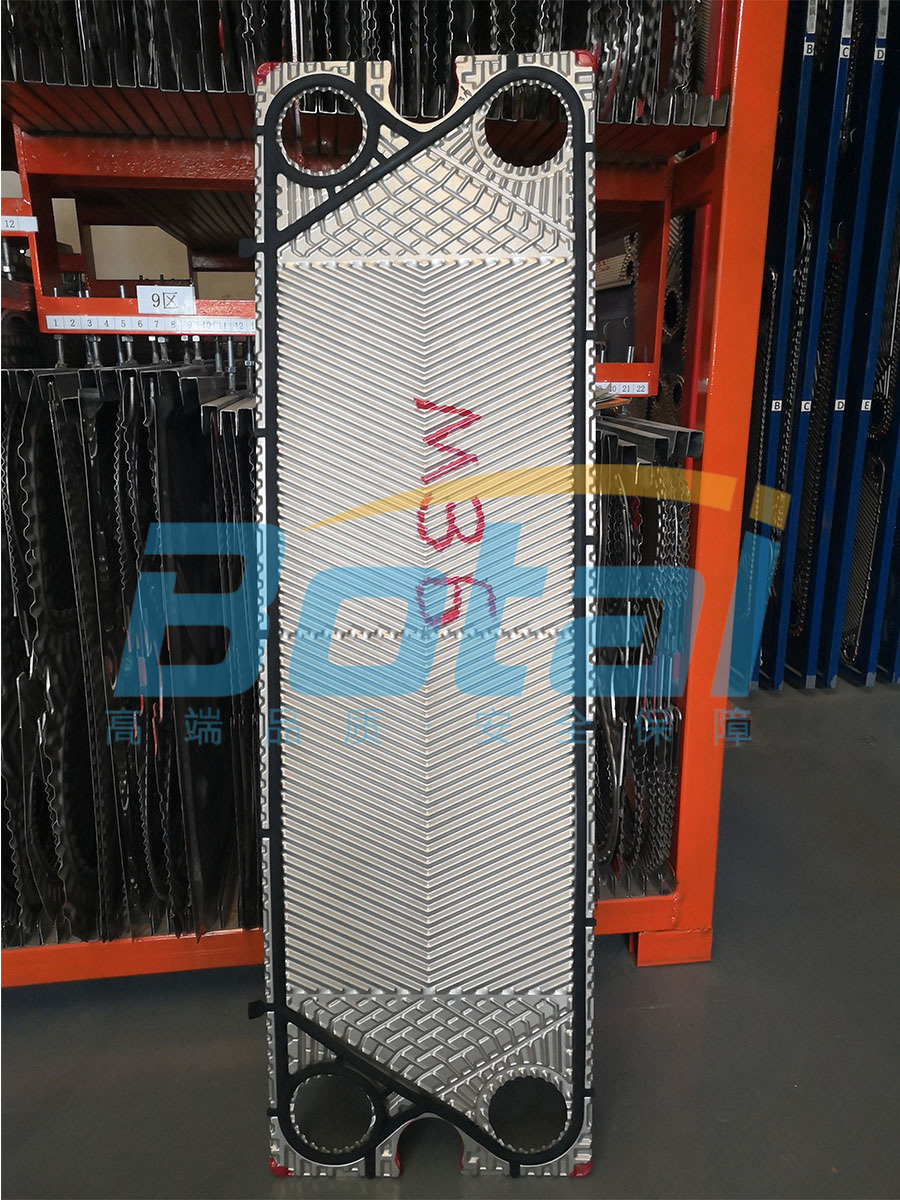
Plate Heat Exchanger Manufacturer:Food-grade Plate Heat Exchangeris a device that provides heat. It plays a key role in residential heating and industrial temperature control. So, what is its working principle? What problems can it easily cause? Below, I will introduce it to everyone.
Food-grade Plate Heat ExchangerCharacteristics and Working Principle
1. Characteristics
① High efficiency and energy saving: The overall working efficiency is very high, more than three times higher than that of general shell-and-tube types.
② Compact structure: The structure is arranged closely with plates, occupying a small space area. It is much smaller than shell-and-tube heat exchangers under the same heat exchange area.
③ Easy to clean: After long-term operation, cleaning is definitely required. The equipment uses clamping plates for fixation, making disassembly convenient and the cleaning process simple.
④ Long service life: The plate material is made of stainless steel and titanium alloy plates, which can resist various acidic corrosion and are not easily aged.
⑤ Strong adaptability: The power can be changed by adding metal plates, making it suitable for various process requirements.
2. Working Principle
Plate Heat Exchanger ManufacturerThe stainless steel metal plates of the food-grade plate heat exchanger are assembled in an inverted mode, forming a mesh contact point, allowing the fluid in the channel to become a mesh fluid. This enables the fluid to flow from one end to the other, forming a unidirectional circulation loop, or alternatively, forming diagonal flow in reverse, to achieve the purpose of heat transfer.
Previous Page:

Address: Baofu No.2, Tianbao Economic Development Zone, Baodi District, Tianjin
Telephone:+86 022-29277918 +86 15510836301
Fax: 022-29277920
E-mail:tjbthrsb88@163.com