Tianjin Botai Heat Exchange Equipment Co.,Ltd

What are the cleaning methods for water plate heat exchangers?
2020-11-11
The cleaning of the plates in a plate heat exchanger is one of the key standards for maintaining a high thermal conductivity coefficient. Between the plates, the substance moves along the narrow and rugged flow channels. Even a thin layer of scale can cause changes in the flow channels, significantly affecting the movement of the liquid, increasing losses, and reducing the thermal conductivity coefficient. For example, a certain sugar factory used a flat stainless steel plate heat exchanger for heating, but due to poor treatment of the secondary water, the flow channels became blocked within just two months of use, rendering it unable to operate.
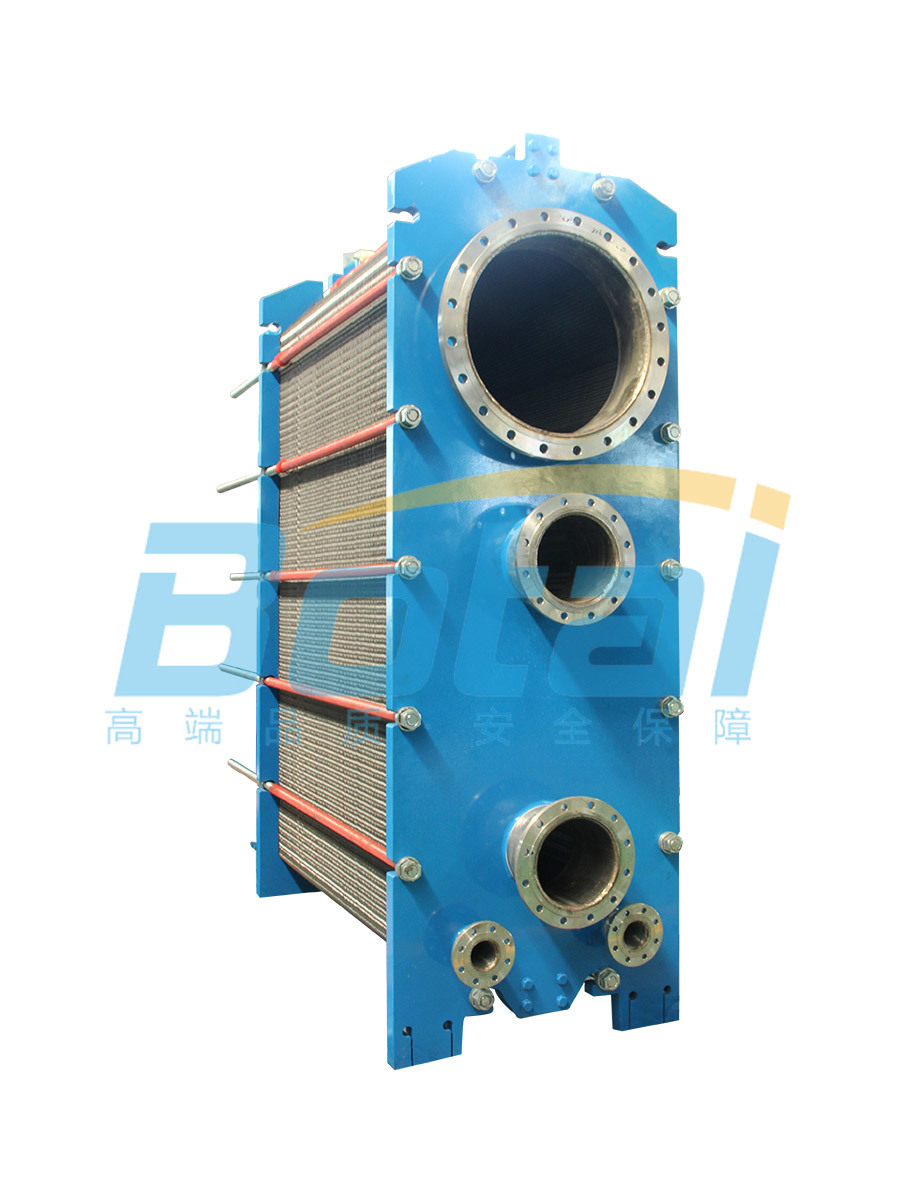
Water-water plate heat exchangerCleaning the plates is one of the key standards for maintaining a high thermal conductivity coefficient. Between the plates, the substance moves through the narrow and rugged flow channels. Even a thin layer of scale can change the flow channel, significantly affecting the movement of the liquid, increasing losses, and reducing the thermal conductivity coefficient. For example, a sugar factory used a plate-type stainless steel heat exchanger for heating, but due to poor treatment of the secondary water, the flow channels became blocked within just two months of use, rendering it inoperable.
1. Chemical water treatment method
This method circulates a chemical solution through the water-water plate heat exchanger to dissolve and discharge the stains on the surface of the plates. This method does not require disassembling the heat exchanger, simplifying the cleaning process and reducing the labor intensity of cleaning. Because the wavy pattern of the plates can promote strong infiltration of the cleaning liquid, which is beneficial for dissolving the scale, the chemical water treatment method is a relatively ideal approach.
2. Mechanical (physical) cleaning method
This method involves manually scrubbing the plates with a soft brush to remove stains from the surface of the plates. Although this method is quite direct, it may not effectively clean hard and thick scale.
3.Water-water plate heat exchangerComprehensive cleaning method
For cases where the scale on the water cooler is hard and thick, simply using one of the above methods will not achieve a thorough cleaning. The analytical method first softens the scale using the chemical water treatment method, and then removes the scale using the mechanical (physical) cleaning method to keep the plates clean.

Address: Baofu No.2, Tianbao Economic Development Zone, Baodi District, Tianjin
Telephone:+86 022-29277918 +86 15510836301
Fax: 022-29277920
E-mail:tjbthrsb88@163.com