Tianjin Botai Heat Exchange Equipment Co.,Ltd

Plate heat exchanger company: What should I do if the water-to-water plate heat exchanger is leaking?
2020-11-17
Plate heat exchanger company: Water-to-water plate heat exchangers are very prone to leaks during operation. There are many reasons for these leaks, and depending on the different causes, the methods for addressing external leaks in plate heat exchangers also vary. Below, the author will analyze the reasons for external leaks in plate heat exchangers and propose corresponding solutions.
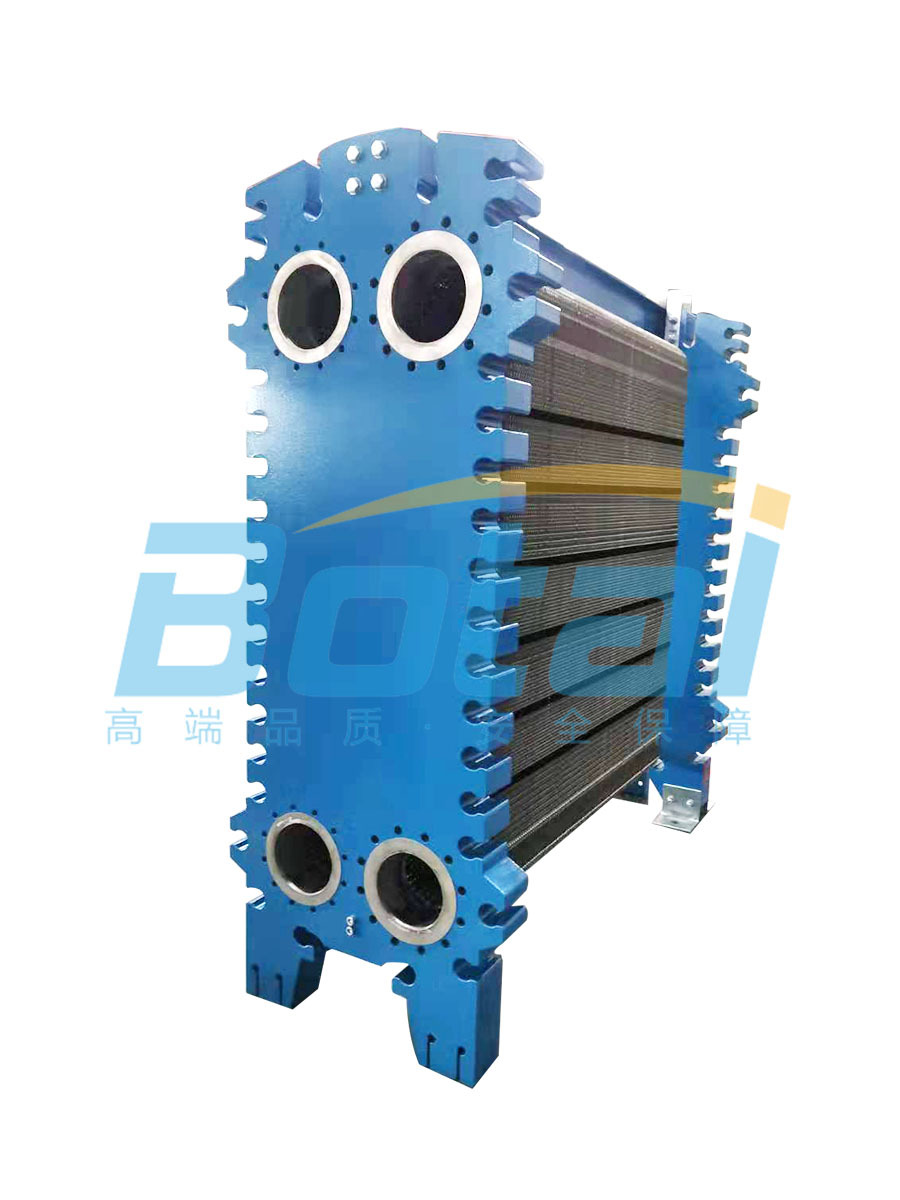
Plate Heat Exchanger Company:Water-to-Water Plate Heat ExchangerDuring the entire operation process, it is very easy to have leaks. There are many reasons for leaks, and depending on the different reasons, the methods to solve the external leaks of the plate heat exchanger also vary. Below, the author will analyze the reasons for the external leaks of the plate heat exchanger and propose corresponding solutions.
I. Reasons for External Leaks
1. The clamping specifications are inadequate, and the specifications of each part are uneven (the error of each part's specifications should not exceed 3 millimeters) or the anchor bolts of the plate heat exchanger are loose.
2. Some sealing gaskets have come out of the sealing groove, the main protruding surface of the sealing gasket is dirty, the sealing gasket is damaged, or the gasket has become brittle.
3.Water-to-Water Plate Heat Exchanger PlatesThe plates deform, causing misalignment during assembly.
4. There are cracks in the sealing groove of the plates or in the secondary sealing area.
II. Solutions for External Leaks
1. In a no-pressure situation, re-clamp the machine according to the clamping specifications provided by the manufacturer. The specifications should be uniform, and the error of the clamping specifications should not exceed ±0.2N (mm) (N is the number of plates). The flatness between the two clamping plates should be maintained within 2 millimeters.
2. Mark the leak location, then disassemble the plate heat exchanger for inspection and handling, reassemble or replace gaskets and plates.
3. Disassemble the heat exchanger, repair or replace the deformed plates. If there are no plate accessories, temporarily disassemble the deformed plates and reassemble them for use.
4. Plate Heat Exchanger Company: Clean the surface of the reassembled plate's epithelial cells, and the water-to-water plate heat exchanger should prevent waste from adhering to the protruding surface of the gasket.
Previous Page:

Address: Baofu No.2, Tianbao Economic Development Zone, Baodi District, Tianjin
Telephone:+86 022-29277918 +86 15510836301
Fax: 022-29277920
E-mail:tjbthrsb88@163.com