Tianjin Botai Heat Exchange Equipment Co.,Ltd

Plate heat exchanger Manufacturer: What are the installation methods for plate heat exchanger seals?
2021-03-08
The sealing gasket of the plate heat exchanger is not unfamiliar to everyone, but its installation methods may not be so familiar. Today, we will discuss three common installation methods for the sealing gasket of the plate heat exchanger, hoping that you can handle the installation of the sealing gasket with ease.
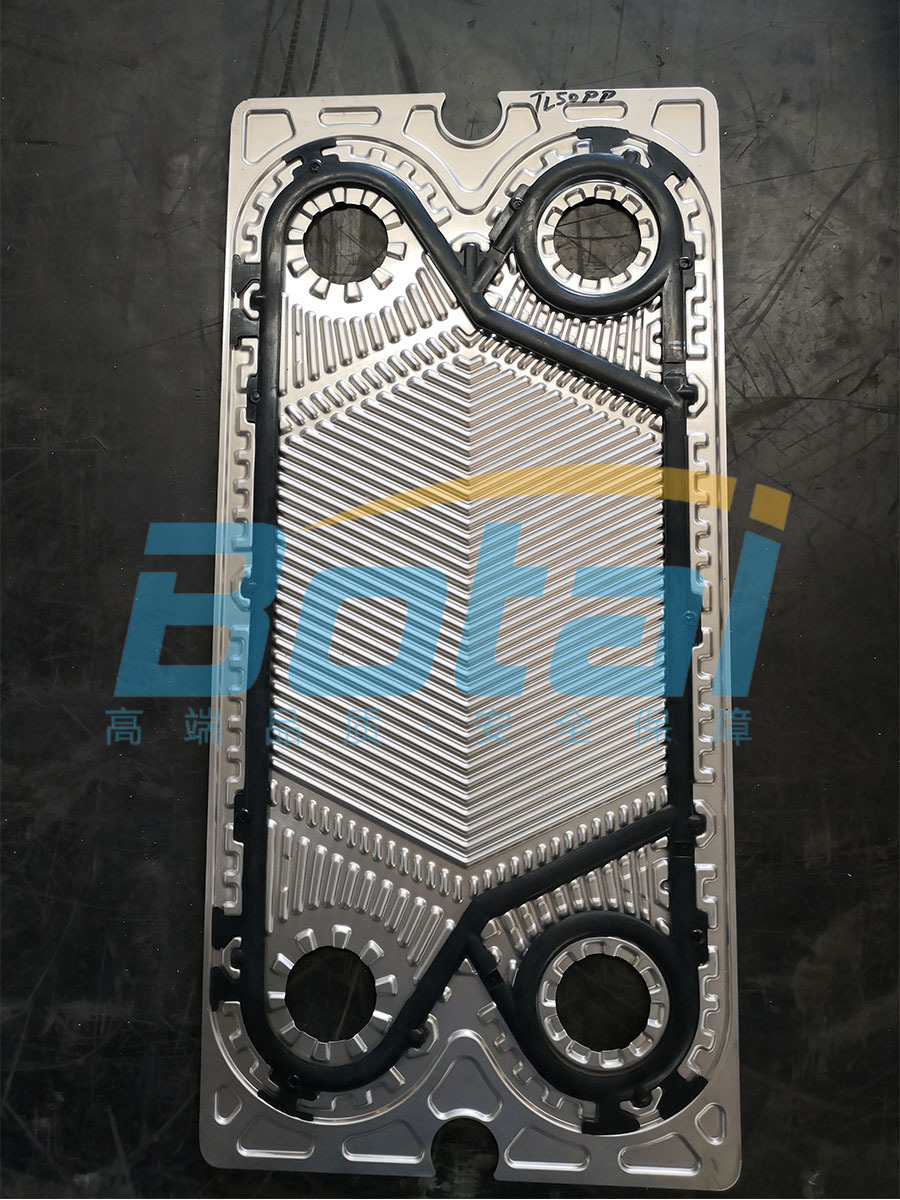
Plate heat exchanger ManufacturerThe plate heat exchanger sealing gasket is not unfamiliar to everyone, but its installation methods may not be so familiar. Today we will discuss three common installation methods for the plate heat exchanger sealing gasket, hoping to make the installation of the plate heat exchanger sealing gasket easier.
Plate heat exchanger sealing gasketAccording to different installation methods, it can be divided into three forms:
(1) Direct paste type, which means applying sealing glue on the sealing gasket and directly sticking it into the installation groove of the heat exchange plate.
(2) Glue nail embedded type, which means that the heat exchange plate is designed with assembly holes, and glue nails are designed on the edge of the sealing gasket. After placing the sealing gasket into the installation groove, the glue nails are embedded in the assembly holes.
(3) Snap-on type, which means that snap nails are designed on the edge of the sealing gasket, and the sealing gasket is snapped onto the heat exchange plate with the snap nails.
In different application scenarios, the performance of the plate heat exchanger sealing gasket is also different. For example, if users want to achieve higher heat exchange efficiency, the sealing gasket used will generally adopt a diagonal flow form;
If you want to save costs, you will adopt a single-side flow form, etc. Let's take a closer look at the specific performance of the plate heat exchanger sealing gasket in different scenarios!
Plate heat exchangerThe plates are divided into single-side flow and diagonal flow according to the flow form of the heat exchange medium. Correspondingly, the plate heat exchanger sealing gaskets are divided into single-side flow and diagonal flow according to the flow form of the heat exchange medium.
Single-side flow of the plate heat exchanger sealing gasket refers to the heat exchange medium flowing in from the right corner hole of the heat exchange plate and flowing out from the right corner hole. Similarly, the heat exchange medium flowing in from the left corner hole flows out from the left corner hole.
Diagonal flow refers to the heat exchange fluid flowing in from the right corner hole and flowing out from the left corner hole, or the fluid flowing in from the left corner hole flows out from the right corner hole, presenting a diagonal flow pattern.
Plate heat exchanger Manufacturer: In terms of heat exchange efficiency, diagonal flow is superior to single-side flow, but the cost of using single-side flow is relatively low. Therefore, under the condition that it can meet the heat exchange efficiency, single-side flow is generally adopted.

Address: Baofu No.2, Tianbao Economic Development Zone, Baodi District, Tianjin
Telephone:+86 022-29277918 +86 15510836301
Fax: 022-29277920
E-mail:tjbthrsb88@163.com