Tianjin Botai Heat Exchange Equipment Co.,Ltd

Removable plate heat exchanger structure and application scenarios
2020-12-07
The detachable plate heat exchanger is an ideal device for heat exchange between liquid-liquid and liquid-vapor. It is a new type of high-efficiency heat exchanger made up of a series of metal plates stacked together with a certain corrugated shape. Its unique structure gives it a significant advantage among various types of heat exchangers.
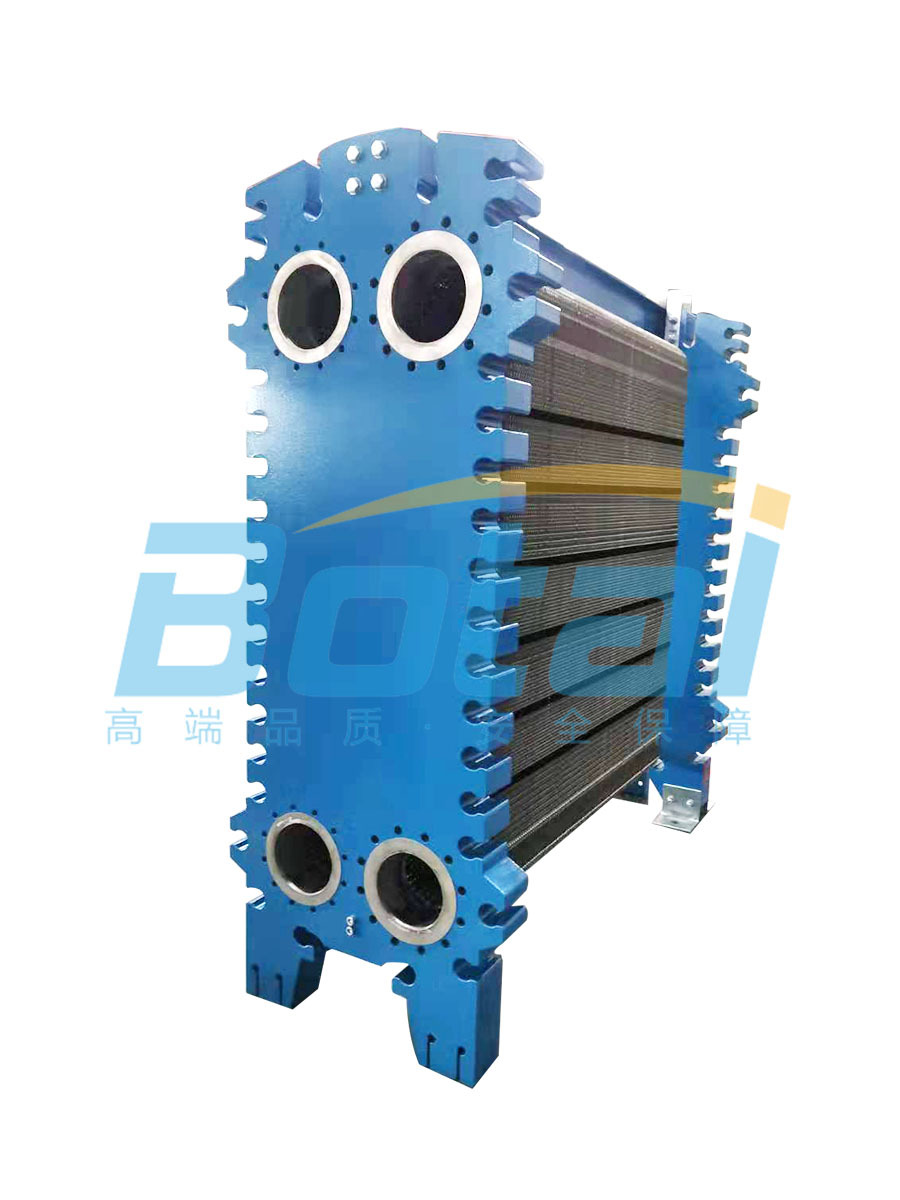
Removable plate heat exchangerIt is an ideal device for heat exchange between liquid-liquid and liquid-vapor. It is a new type of efficient heat exchanger made up of a series of metal plates stacked with a certain corrugated shape. Its unique structure gives it a significant advantage among various types of heat exchangers.
Structural principle
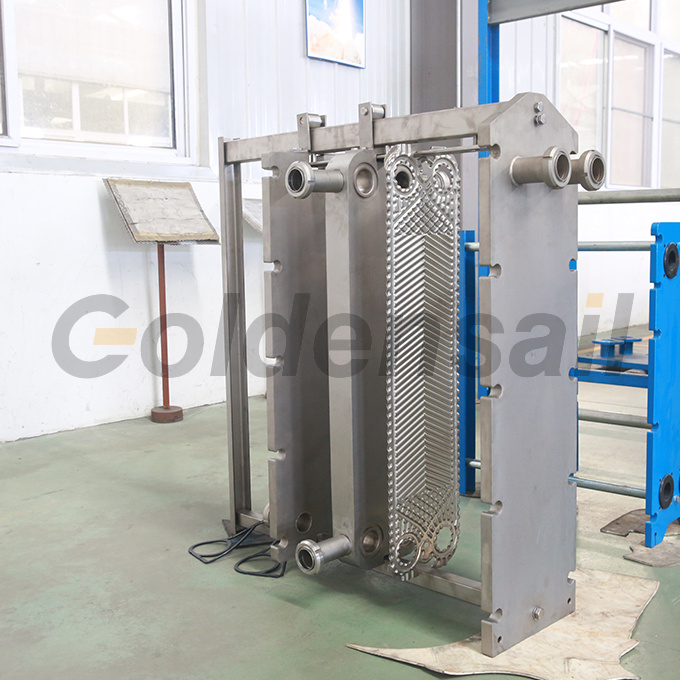
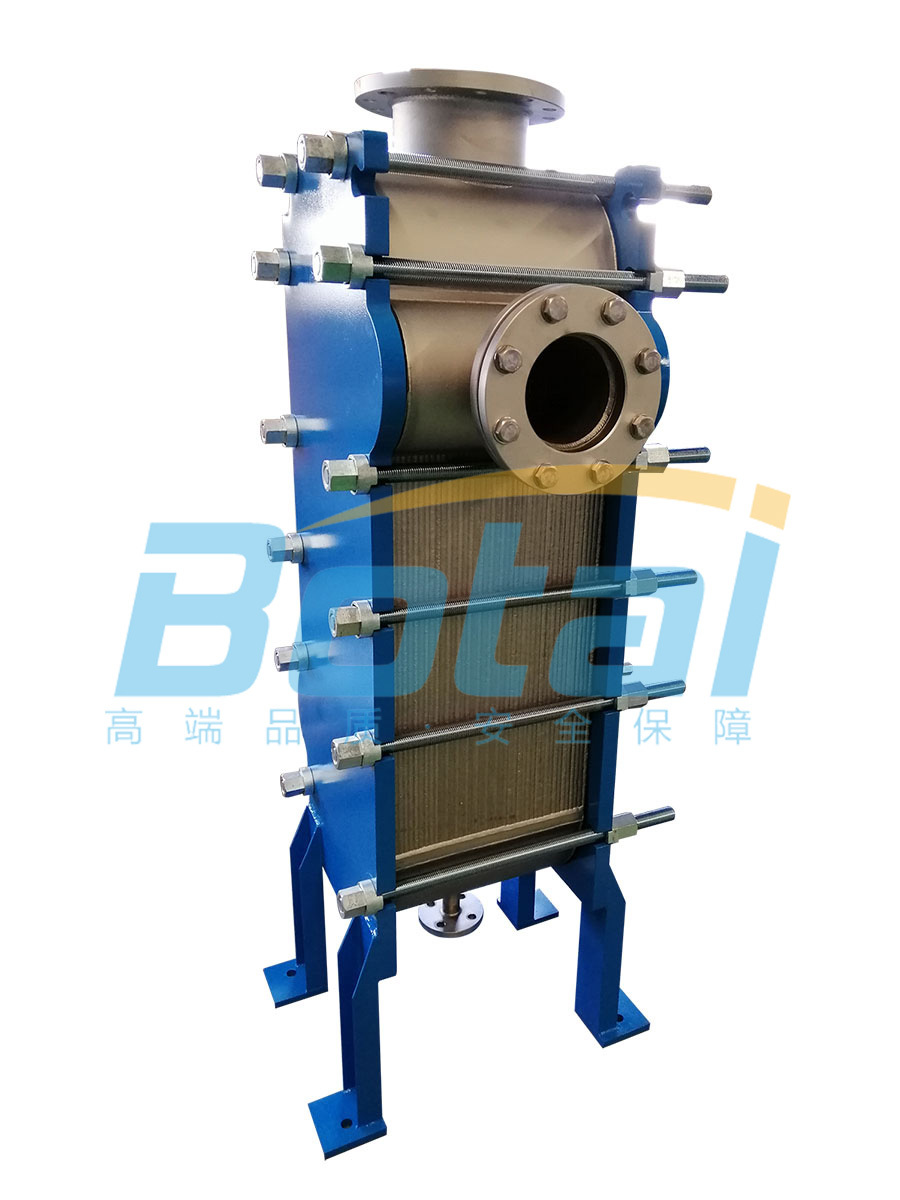
The removable plate heat exchanger is formed by many stamped corrugated thin plates sealed around by gaskets at certain intervals, and pressed tightly with a frame and compression screws. The four corner holes of the plates and gaskets form the distribution and collection pipes for the fluid, while reasonably separating the hot and cold fluids, allowing them to flow in the channels on both sides of each plate and exchange heat through the plates.
Working principle
Plate coolerIt is a heat exchanger made of thin metal plates pressed into a certain corrugated shape, then stacked and fastened with clamping plates and bolts. Thin rectangular channels are formed between various plates, allowing heat exchange through half plates. The working fluid flows through the narrow and tortuous channels formed between two plates. The hot and cold fluids pass through the channels in sequence, with a separating plate in between to separate the fluids and facilitate heat exchange through this plate.
Its structure and heat exchange principle determine its characteristics of compact structure, small footprint, high heat transfer efficiency, great operational flexibility, wide application range, low heat loss, and ease of installation and cleaning.
Basic classification of plate coolers
Generally, we mainly distinguish heat exchangers based on their structure, that is, based on their shape, which can be divided into four major categories: ① Removable plate, ② Welded plate, ③ Spiral plate, ④ Plate and shell (also known as honeycomb heat exchanger). Among them, welded types are further divided into: semi-welded, fully welded, plate and shell type, and brazed.Plate heat exchanger.
Applications of removable plate heat exchangers
1. Refrigeration: Used as condensers and evaporators.
2. HVAC: Intermediate heat exchangers used with boilers, intermediate heat exchangers in high-rise buildings, etc.
3. Chemical industry: Soda ash industry, synthetic ammonia, alcohol fermentation, resin synthesis cooling, etc.
4. Metallurgical industry: Heating or cooling of aluminum silicate mother liquor, cooling in steelmaking processes, etc.
5. Mechanical industry: Cooling of various quenching liquids, cooling of lubricating oil for reducers, etc.
6. Power industry: Cooling of high-voltage transformer oil, cooling of generator bearing oil, etc.
7. Pulp and paper industry: Heat recovery in bleaching processes, heating of washing pulp liquid, etc.
8. Textile industry: Cooling of viscose fiber caustic soda solution, cooling of boiling nitrated fiber, etc.
9. Food industry: Cooling of juice sterilization, heating and cooling of animal and vegetable oils, etc.
10. Grease process: Soap base atmospheric drying, heating or cooling of various process liquids.
11. Central heating: Heating of waste heat areas in thermal power plants, heating of bathing water.
12. Others: Petroleum, shipping, seawater desalination, geothermal utilization, solar energy utilization.

Address: Baofu No.2, Tianbao Economic Development Zone, Baodi District, Tianjin
Telephone:+86 022-29277918 +86 15510836301
Fax: 022-29277920
E-mail:tjbthrsb88@163.com