Tianjin Botai Heat Exchange Equipment Co.,Ltd

Characteristics and Case Introduction of Wide Flow Channel Plate Heat Exchanger
2020-10-16
The wide flow channel plate heat exchanger features a unique coarse corrugated structure design, with the plate outline primarily composed of horizontal corrugations. The medium can flow unrestricted over the heat exchange surface of the plates without blockage, and it possesses high heat transfer performance that traditional tubular heat exchangers do not have.
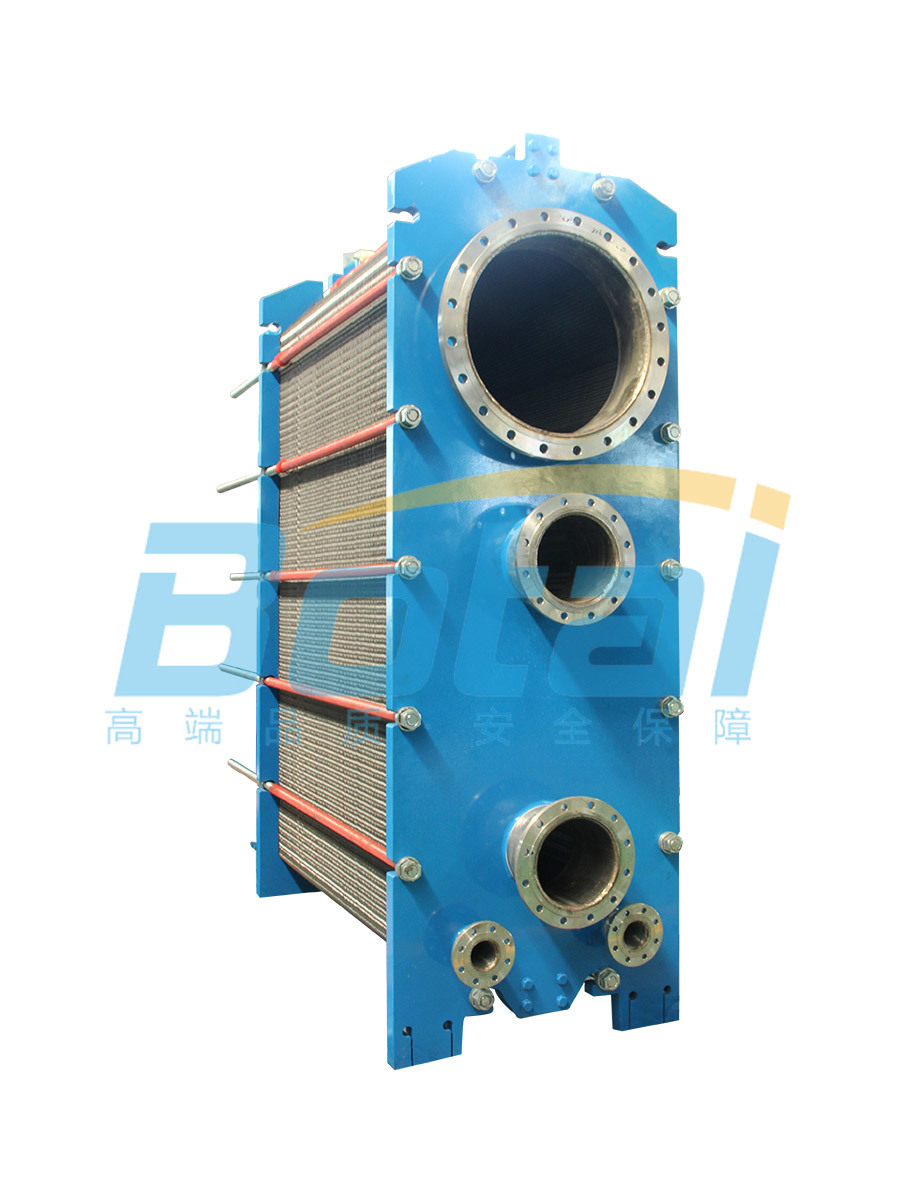
Wide channel plate heat exchangerThe plate type adopts a unique coarse corrugated structure design, with the plate outline mainly composed of horizontal corrugations, allowing the medium to flow unrestricted over the heat exchange surface of the plates without blockage, and possessing high heat transfer performance not found in traditional tubular heat exchangers.
Product Features:
The design can be selected as wide-narrow or wide-wide channels based on the characteristics of the fluid and different process conditions; the flow channels with a gap width from 5mm to 12mm have no obstruction points, effectively preventing blockage; different plate and gasket materials can be chosen based on different corrosive media conditions; the plates can be disassembled for cleaning, suitable for industries that require cleanliness and hygiene such as food and beverage and wastewater treatment.
Wide channel plate heat exchangerApplicable Media:
Suitable for special media conditions where herringbone corrugations cannot be applied, including media with particles, solids, crystals, fibers, and slurry substances, and also suitable for high-viscosity media. For example: media containing solids or crystals; media containing fibers or slurry substances; high-viscosity media. It can be widely used in industries such as wastewater heat recovery, sugar production, papermaking, textile, and food and juice.
Application Cases:
In some process processes in industries such as wastewater heat recovery, light industry brewing, sugar production, textile, and papermaking, when handling mash, media containing particles, and viscous media. Compared to groundwater used in heat pump and geothermal water source heat pump systems, urban raw sewage has poorer water quality, with much greater blockage and corrosion from suspended solids than groundwater, so systems that recover and utilize urban sewage thermal energy must take corresponding technical measures; otherwise, they will not operate normally.
The heat exchangers used in sewage source heat pumps are prone to blockage due to the presence of particles and other impurities in the sewage, while conventional herringbone plate heat exchangers are prone to blockage after use. Traditional tubular heat exchangers have the disadvantages of large footprint and low heat transfer efficiency. Therefore, more and more users are choosing to use this free flow wide channel plate heat exchanger BNF series products as heat extraction equipment.
Previous Page:

Address: Baofu No.2, Tianbao Economic Development Zone, Baodi District, Tianjin
Telephone:+86 022-29277918 +86 15510836301
Fax: 022-29277920
E-mail:tjbthrsb88@163.com