Tianjin Botai Heat Exchange Equipment Co.,Ltd

Manufacturer: Description of food-grade plate heat exchangers
2020-10-21
Description of food-grade plate heat exchangers Manufacturer of plate heat exchangers: Depending on the applications, it has different names: plate heater, plate cooler, plate condenser, plate preheater;
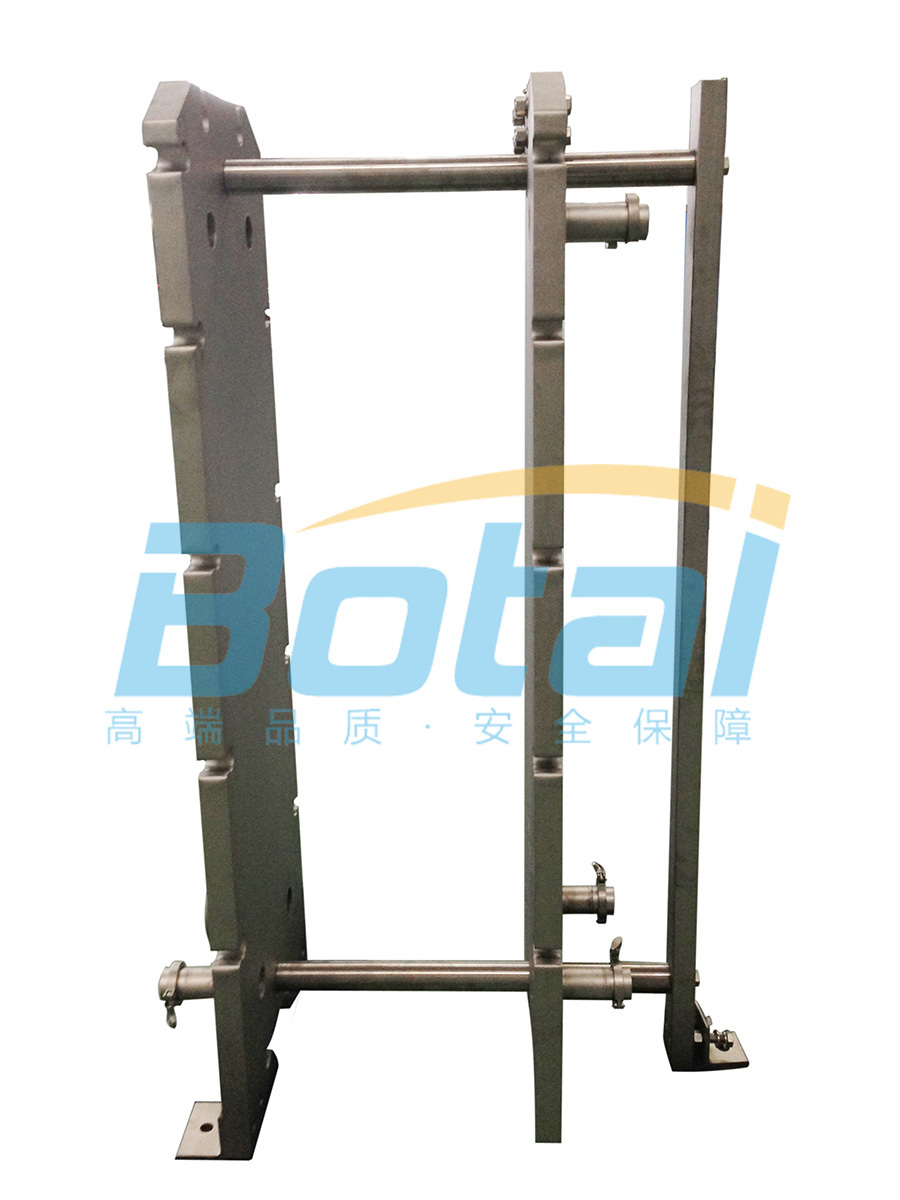
Food-grade plate heat exchangerDescription
ManufacturerAccording to the applications, it has different names: plate heater, plate cooler, plate condenser, plate preheater;
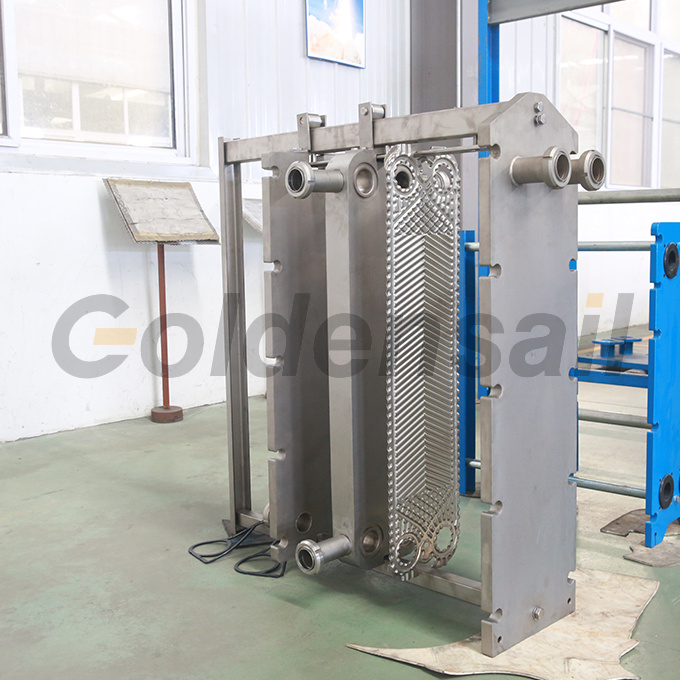
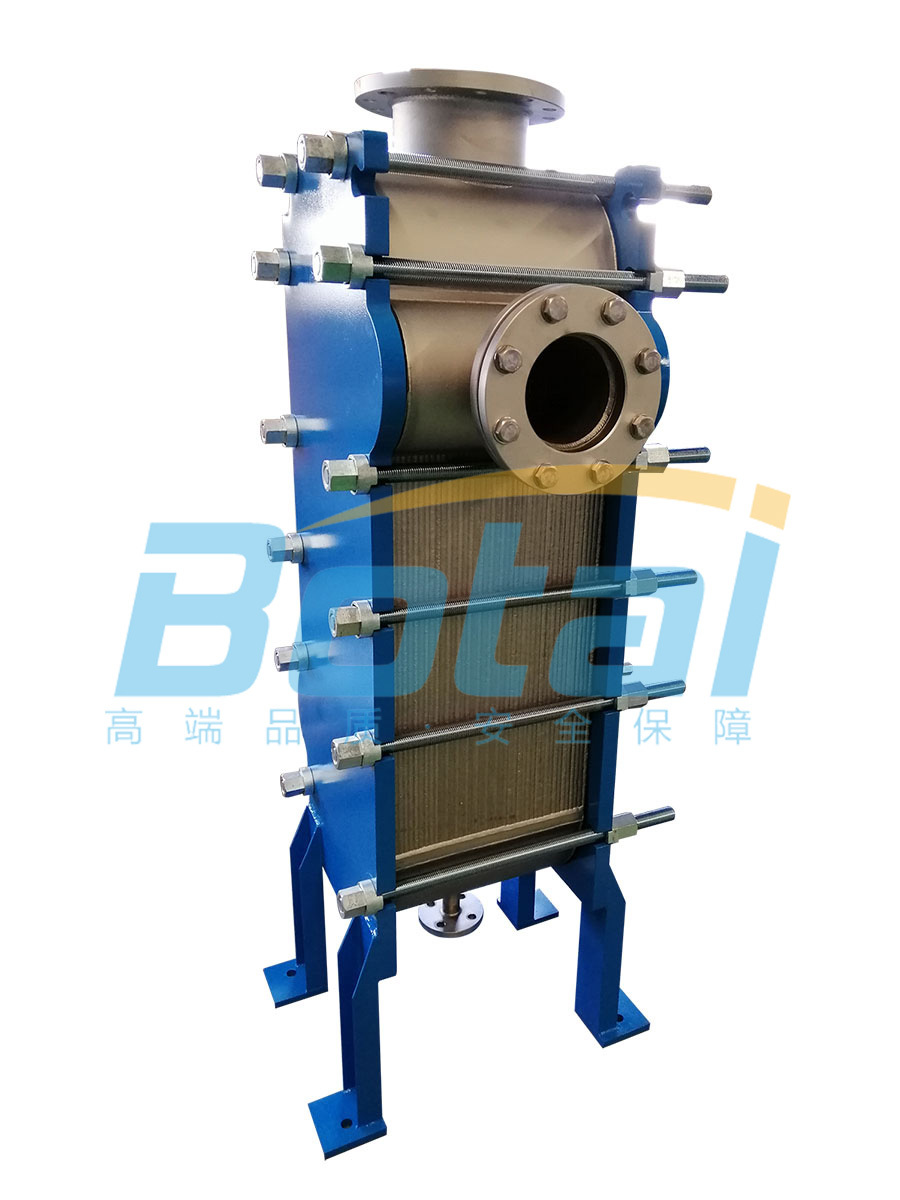
The food-grade plate heat exchanger consists of a set of corrugated metal plates, which have holes for the two liquids to pass through for heat transfer. The metal plates are installed in a frame with a fixed plate and a movable pressing plate on one side, and are clamped with clamping bolts. Sealing gaskets are installed on the plates to seal the liquid channels and guide the fluids to alternately flow into their respective channels.
The flow rate, physical properties, pressure drop, and temperature difference of the liquids determine the number and size of the plates. The chemical properties and corrosion characteristics of the liquids determine the materials of the plates and gaskets. Different designs of corrugated plate structures can significantly enhance the turbulence level and create many support points, sufficient to withstand the pressure difference between the media.
The metal plates and movable pressing plates are mounted on a hanging beam and positioned by lower guide rods, while the ends of the rods are fixed to support columns. However, if either one or both liquids pass through the heat exchanger more than once, the interfaces should be opened on the fixed plate and the movable pressing plate.
ManufacturerThe reasonable matching of the corrugation angle and size of the plates can greatly improve the heat transfer effect per unit heat transfer area, adjust the resistance of the liquids, and save heat transfer area, resulting in reduced investment costs and shortened payback time.
Food-grade plate heat exchangerDesign selection:
(1) Physical parameters of cold and hot media, such as acidity, chloride content, viscosity, density, thermal conductivity, specific heat, etc.
(2) Inlet and outlet temperatures of cold and hot media.
(3) Flow rate of cold and hot media or the flow rate of one of them.
(4) Pressure loss requirements of cold and hot media.
(5) Inherent characteristics of the heat exchanger, such as plate materials, sealing gaskets, etc.

Address: Baofu No.2, Tianbao Economic Development Zone, Baodi District, Tianjin
Telephone:+86 022-29277918 +86 15510836301
Fax: 022-29277920
E-mail:tjbthrsb88@163.com