Tianjin Botai Heat Exchange Equipment Co.,Ltd

What industries are food-grade plate heat exchangers used in?
2020-10-26
Application Fields Food-grade plate heat exchangers have been widely used in chemical, metallurgy, power, food, mining, petroleum, pharmaceuticals, chemical fiber, papermaking, light textile, shipbuilding, and heating sectors, and can be used in various situations such as evaporation, cooling, heating, sterilization and disinfection, condensation, and waste heat recovery.
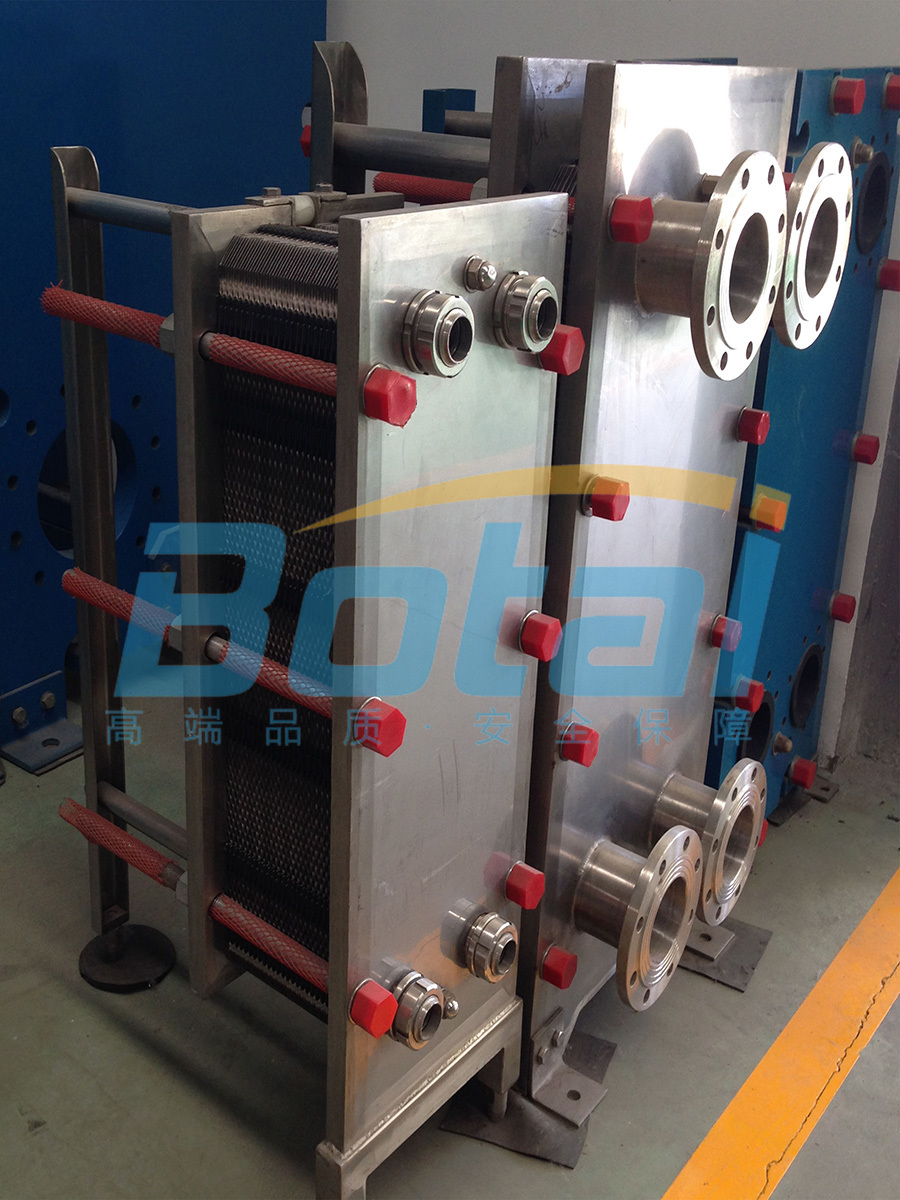
Applications
Food-grade plate heat exchangersHas been widely used in chemical, metallurgy, electric power, food, mining, petroleum, medicine, chemical fiber, papermaking, light textile, shipbuilding, heating and other sectors, and can be used in various situations such as evaporation, cooling, heating, sterilization and disinfection, condensation, and waste heat recovery.
Solar energy utilization: Participates in the heat exchange process of antifreeze such as glycol in solar collector plates to achieve the purpose of utilizing solar energy.
Chemical industry: Manufacturing titanium dioxide, alcohol fermentation, ammonia synthesis, resin synthesis, rubber manufacturing, cooling phosphoric acid, cooling formaldehyde solution, alkali carbon industry, electrolytic alkali production.
Steel industry: Cooling quenching oil, cooling liquid for electroplating, cooling lubricating oil for reducers, cooling rolling mills, cooling liquid for drawing machines.
Food-gradePlate heat exchangersUsed in the metallurgy industry: Heating and cooling of sodium aluminate mother liquor, cooling sodium aluminate, cooling lubricating oil for aluminum smelting rolling mills.
Machinery manufacturing industry: Cooling various quenching liquids, cooling lubricating oil for presses and industrial mother machines, heating engine oil.
Food industry: Sterilization and cooling of salt, dairy products, soy sauce, vinegar, heating and cooling of animal and vegetable oils, heating and cooling of beer and malt juice in beer production, sugar manufacturing, gelatin concentration, sterilization and cooling, and production of monosodium glutamate.
Textile industry: Heat recovery of various waste liquids, cooling of boiling phosphoric fiber, cooling of viscose solution, cooling of acetic acid and acid anhydride, cooling of alkaline aqueous solution, heating and cooling of viscose filaments.
Papermaking industry: Cooling black liquor, heating and cooling of bleaching salt and alkali solution, heat recovery of waste liquid from glass paper, heating cooking acid, cooling sodium hydroxide solution, recovering waste liquid from bleached paper, condensation of exhaust gas, preheating concentrated pulp-like waste liquid.
Central heating: Heating of waste heat areas in thermal power plants, heating of domestic water, heating in boiler areas.
Oil and fat industry: Heating and cooling of synthetic detergents, heating of whale oil, cooling of vegetable oil, cooling of sodium hydroxide, cooling of glycerin and emulsified oil.
Electric power industry: Cooling of generator shaft pumps, cooling of transformer oil.
Shipping: Diesel engines, central coolers, unloading sleeve water coolers, piston coolers, lubricating oil coolers, preheaters, seawater desalination systems (including multi-stage and single-stage).
Seawater aquaculture seedling raising: Supporting boilers to raise the temperature of seawater for seedlings has saved coal usage, thus saving energy and protecting the environment while improving efficiency.
Food-grade plate heat exchangersOther industries: Petroleum, medicine, glass, cement, building ceramics, geothermal utilization, etc.

Address: Baofu No.2, Tianbao Economic Development Zone, Baodi District, Tianjin
Telephone:+86 022-29277918 +86 15510836301
Fax: 022-29277920
E-mail:tjbthrsb88@163.com