Tianjin Botai Heat Exchange Equipment Co.,Ltd

Plate heat exchanger Manufacturer: The design concept of food-grade plate heat exchangers
2020-10-30
Design concept of food-grade plate heat exchangers: 1. The new flow distribution area design with pressure enhancement on the plates uses multiple channels in areas with high flow velocity to increase pressure, ensuring that the flow velocity across the entire plate is uniform, significantly improving the heat exchange efficiency of the plates, reducing dead zones, and improving the scaling condition of the plates.
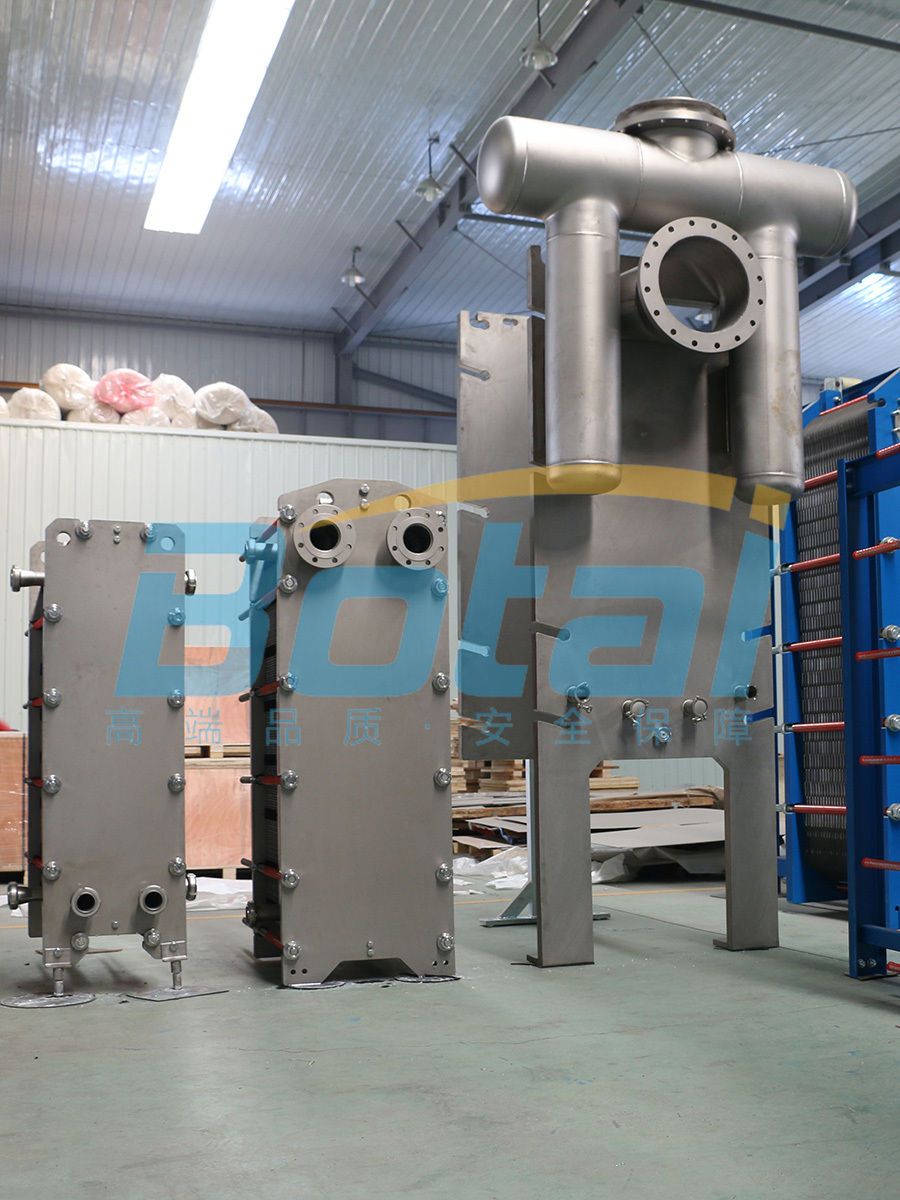
Food-grade plate heat exchangerDesign concept:
1. The new flow area design with pressure enhancement on the plate has multiple channels in areas with high flow velocity, increasing pressure and achieving uniform flow velocity across the entire plate, significantly improving the heat exchange efficiency, reducing dead zones, and improving the scaling condition of the plate.
2. The high-strength hanging port design adds a patterned design at the hanging port, enhancing the rigidity around the flanging, making assembly neater and more aesthetically pleasing, and improving opening performance.
3. Plate heat exchanger Manufacturer: The design of the plate groove in the middle of the plate disconnects the continuous wave pattern inside the plate and adds a half-groove structure, alleviating the pressure on the plate, making it flatter after pressing and less prone to bending.
4. The interlocking design of the plate presses a special mechanical interlocking structure at the four corners of the plate, improving the phenomenon of positional leakage during the assembly process, making assembly more convenient and aesthetically pleasing.
5. The sealing gaskets of the food-grade plate heat exchanger are all designed in a non-adhesive buckle form, reducing operational maintenance costs and facilitating repairs.
Plate heat exchanger ManufacturerTechnical advantages and features:
1. High heat transfer coefficient: The special wave design on the heat transfer plates can generate strong turbulence at extremely low flow rates, and the self-cleaning effect of turbulence can prevent dirt formation, making the heat transfer coefficient of the plate heat exchanger 3-5 times that of shell-and-tube heat exchangers.
2. Economic efficiency: Under the same heat exchange amount, compared to shell-and-tube types: lower investment, lower operating costs, and lower maintenance costs.
3. Adjustability: Just by adding or reducing plates, it can meet the changing needs of the process.
4. Compact structure: Under the same heat exchange amount, it occupies only 1/2 to 1/3 of the space of shell-and-tube types.
5. Food-grade plate heat exchangers are easy to clean and maintain.
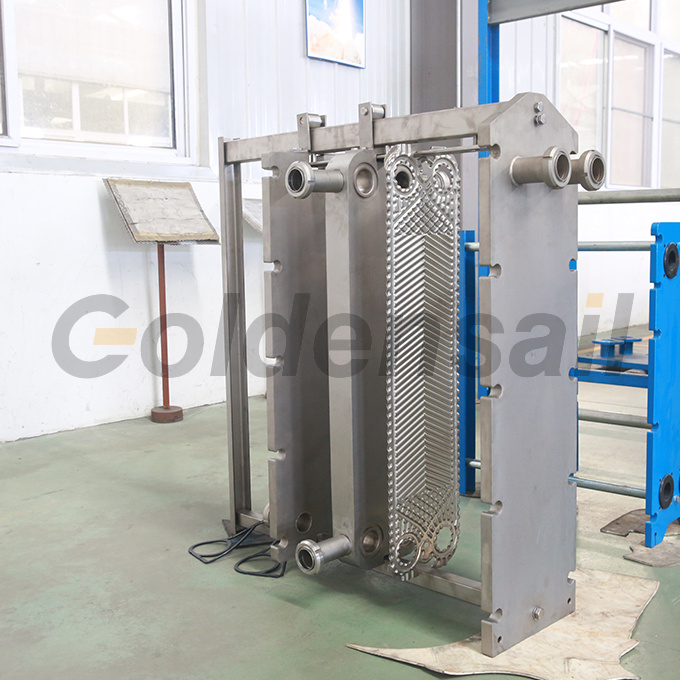
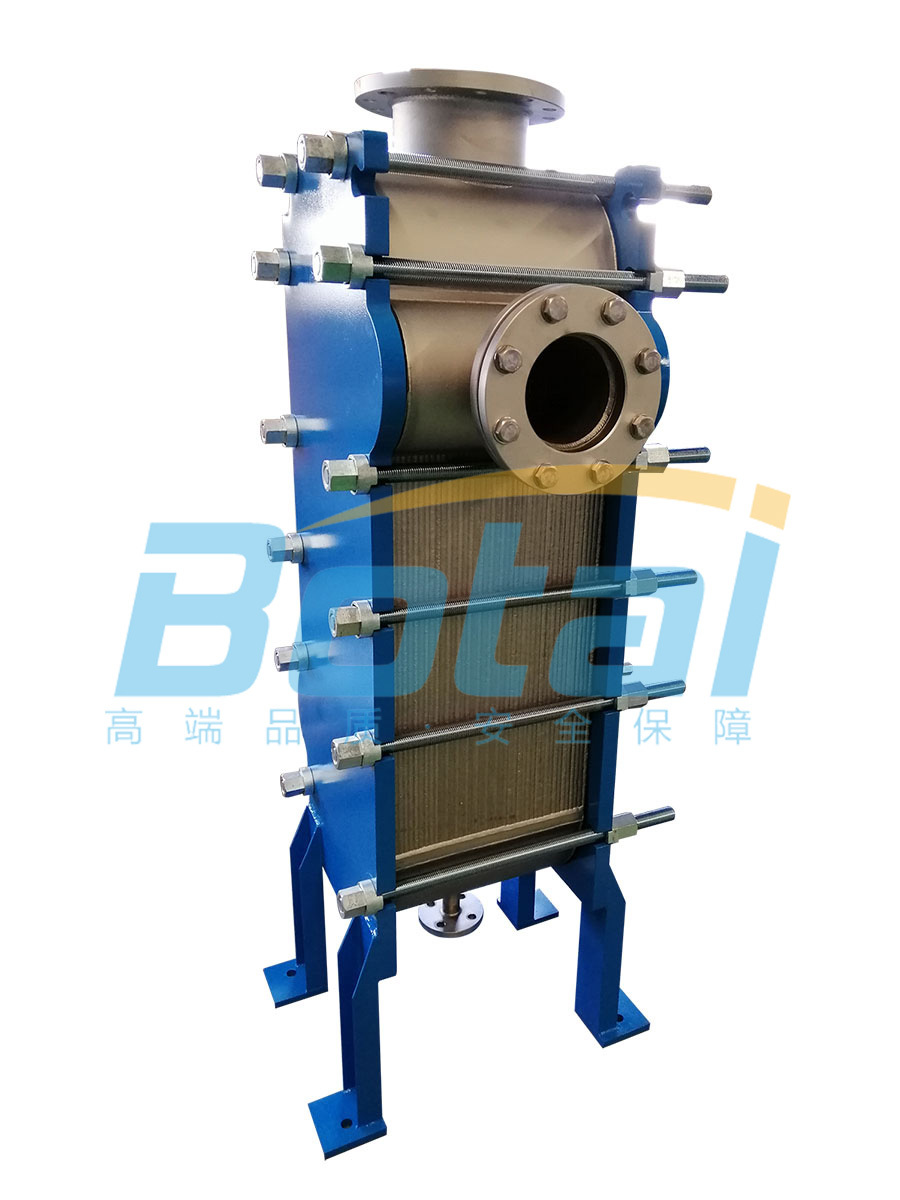

Address: Baofu No.2, Tianbao Economic Development Zone, Baodi District, Tianjin
Telephone:+86 022-29277918 +86 15510836301
Fax: 022-29277920
E-mail:tjbthrsb88@163.com