Tianjin Botai Heat Exchange Equipment Co.,Ltd

The working principle and design characteristics of detachable plate heat exchangers
2020-11-27
The detachable plate heat exchanger is a type of plate heat exchanger. Its characteristics include a high heat transfer coefficient; easy maintenance and cleaning; low fouling factor; compact structure, small footprint, and lightweight; easy to change the heat exchange area or flow combination; and small temperature difference at the outlet.
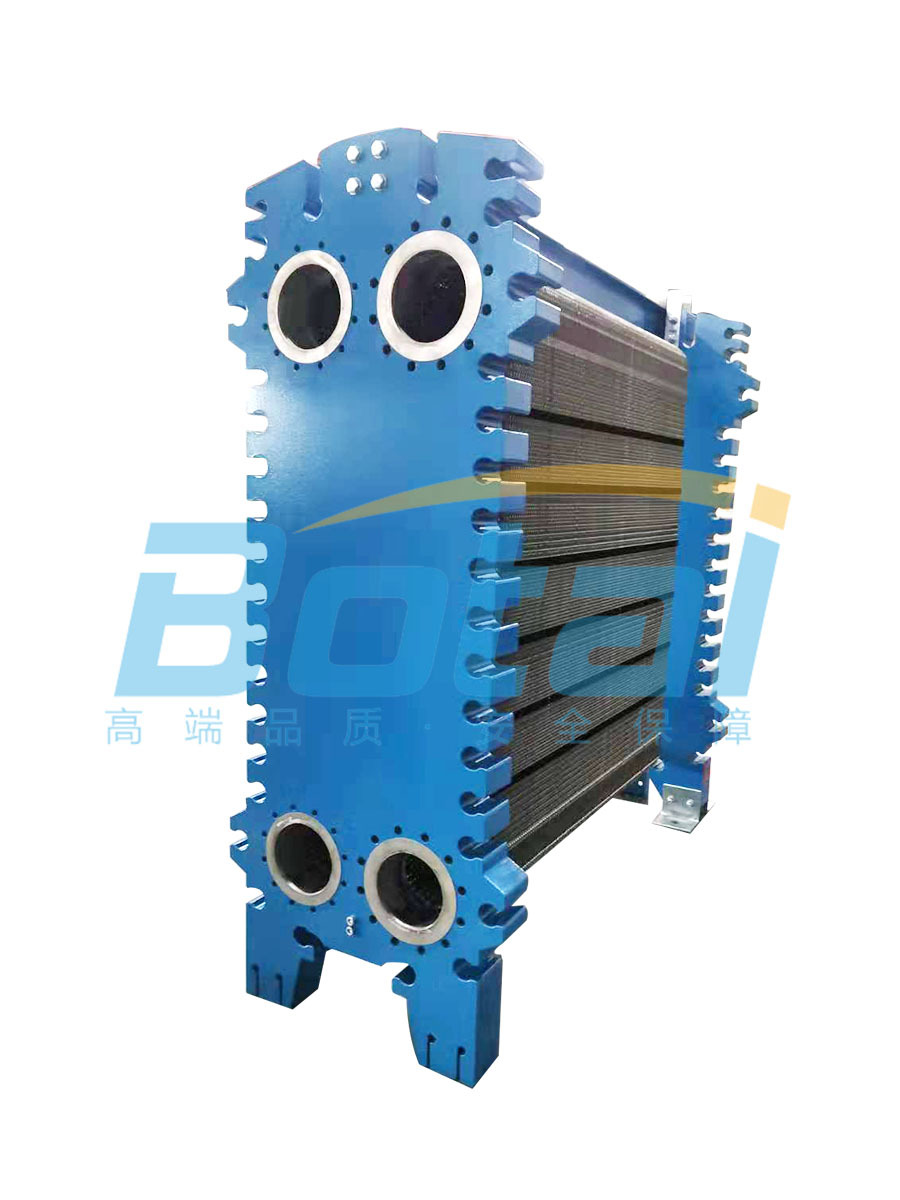
Removable plate heat exchangeris a type of heat exchanger. Its characteristics include high heat transfer coefficient; easy maintenance and cleaning; low fouling factor; compact structure, small footprint, and lightweight; easy to change heat exchange area or flow combination; small temperature difference at the outlet, etc.
Introduction
It is made up of many stamped corrugated thin plates spaced at regular intervals, sealed around by gaskets, and compressed by a frame and pressing spirals. The four corner holes of the plates and gaskets form the distribution and collection pipes for the fluid, while reasonably separating the hot and cold fluids, allowing them to flow in the channels on either side of each plate and exchange heat through the plates.
Working Principle
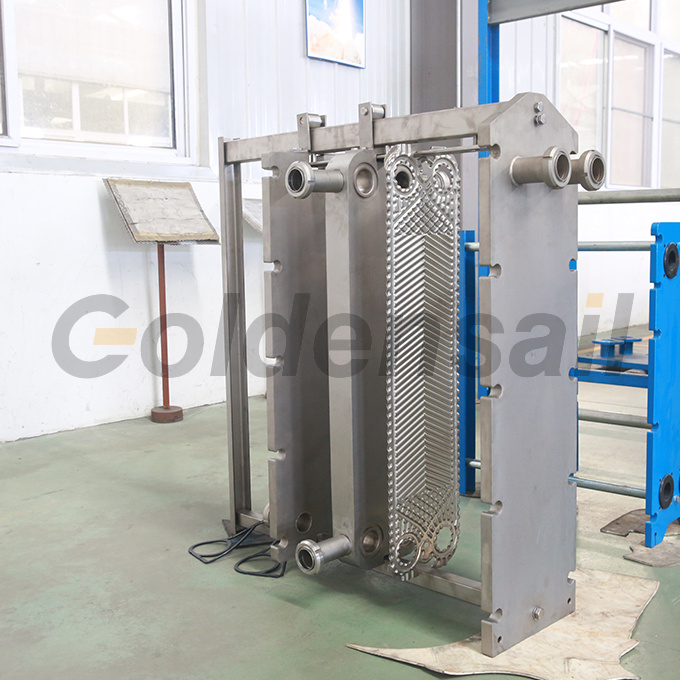
RemovablePlate heat exchangerconsists of a set of metal plates, each with four corner holes for the passage of hot and cold media. During assembly, the A plates and B plates are arranged alternately, forming a mesh channel between the plates. The sealing gaskets keep the hot and cold media sealed within the heat exchanger while effectively separating them to prevent mixing. In the channels, the hot and cold fluids flow alternately, which can be counterflow or parallel flow as needed. During the flow process, the hot and cold fluids exchange heat through the plate walls, achieving the desired effect.
Design Features
1. High efficiency and energy saving: Its heat transfer coefficient is between 3000 and 4500 kcal/m2·°C·h, which is 3 to 5 times higher than that of shell-and-tube heat exchangers.
2. Compact structure: The plates are closely arranged, and compared to other types, it has a smaller footprint and occupies less space. A plate cooler with the same heat exchange area is only 1/5 of that of a shell-and-tube.
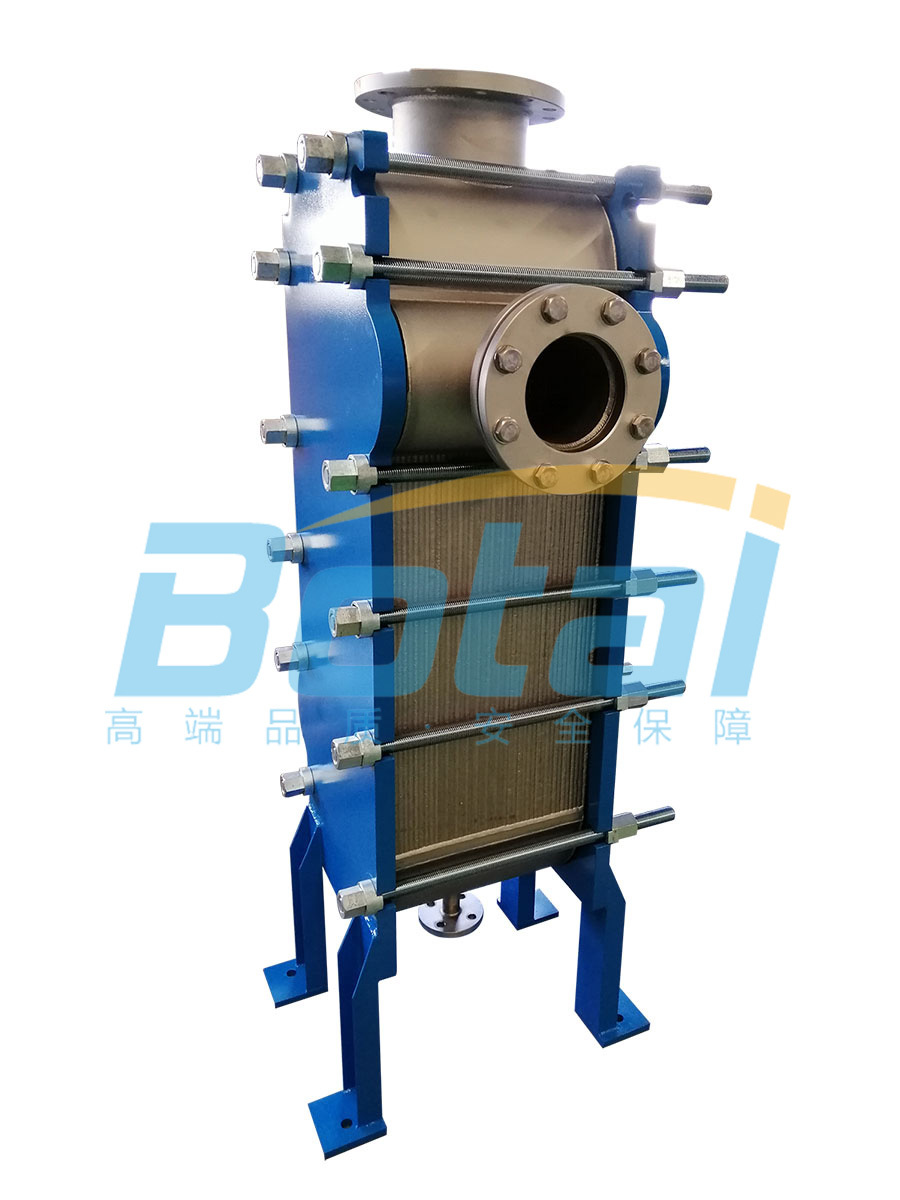
3. Easy to clean and convenient to disassemble: The equipment is clamped tightly by bolts, making it easy to disassemble and clean at any time. Additionally, due to the smooth plate surface and high turbulence, it is not prone to scaling.
4. Long service life: It uses stainless steel or titanium alloy plates, which can withstand various corrosive media. The gaskets can be easily replaced, and maintenance can be conveniently performed.
5. Strong adaptability: The heat exchanger plates are independent components that can be added or removed as needed, with various forms; suitable for various different process requirements.
6. No liquid cross-contamination: The plate cooler is designed with a leakage channel in the sealing groove, ensuring that various media do not mix. Even in the event of a leak, the media will always be discharged outward.
Application
Removable plate heat exchangers have been widely used in metallurgy, mining, electricity, pharmaceuticals, petroleum, chemical industry, food, synthetic fibers, papermaking, light textiles, shipping, heating, and other sectors. They can be used for heating, cooling, evaporation, condensation, sterilization, disinfection, waste heat recovery, and various other situations.
Previous Page:

Address: Baofu No.2, Tianbao Economic Development Zone, Baodi District, Tianjin
Telephone:+86 022-29277918 +86 15510836301
Fax: 022-29277920
E-mail:tjbthrsb88@163.com