Tianjin Botai Heat Exchange Equipment Co.,Ltd

Plate Heat Exchanger Company: Introduction to the Cleaning of Stainless Steel Plate Heat Exchangers
2021-03-26
Plate heat exchanger company: Stainless steel plate heat exchangers usually produce some scale-like substances during use. This is caused by improper use during operation and handling. Everyone should understand the reasons for scale formation and how to eliminate it. Now let's understand the basic principles of cleaning scale from stainless steel plate heat exchangers.
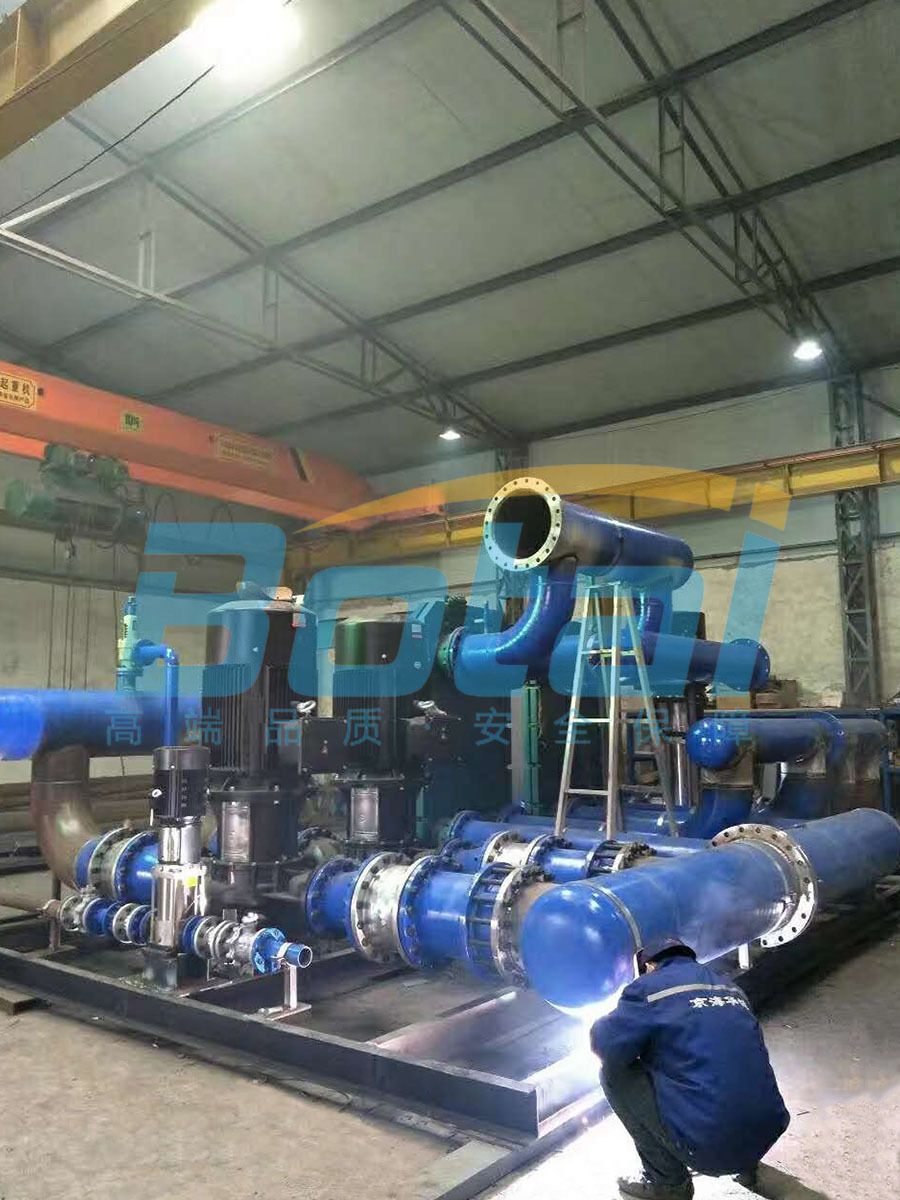
Plate Heat Exchanger Company:Stainless Steel Plate Heat ExchangerDuring use, some flaky substances are usually produced. This is caused by improper use of the product during operation and handling. Everyone should know the reasons for scale formation and how to eliminate it. Now let's understand the basic principles of cleaning scale from stainless steel plate heat exchangers.
1. Peeling Effect: Acidic solutions can dissolve the oxides on the metal surface of the plate heat exchanger, breaking the bond with the oxide skin, causing the oxide skin attached to the metal oxide surface to fall off.
2. Dissolution: Acidic solutions easily react with calcium, magnesium, and carbonate scale, forming soluble compounds to dissolve the scale.
3. Loosening Effect: For mixed scale containing silicates and sulfates, the residual scale becomes loose and flows easily in the acidic solution due to the dissolution of calcium, magnesium, carbonate, and iron oxides in the acidic solution.
4. Gas Lift Effect: After the acidic solution reacts with calcium, magnesium, and carbonate scale, a large amount of carbon dioxide is produced. During the overflow of carbon dioxide gas in the plate heat exchanger, it exerts a certain lifting force on the insoluble or slowly dissolving scale layer, causing the scale to fall off the heating surface of the heat exchanger.
When cleaning the scale from stainless steel plate heat exchangers, the principles may vary depending on the method used. Accordingly, the reaction process between the scale and its acidic solution also differs significantly.
Cleaning methods for removing scale from stainless steel plate heat exchangers:
After long-term use of the plate heat exchanger, the surface of the heat transfer plates will accumulate varying degrees of dirt or deposits, increasing flow resistance and reducing heat transfer performance. This is mainly reflected in the pressure difference between the inlet pressure gauge and the outlet pressure gauge, along with a decrease in the outlet temperature of the medium at the cold end. To avoid clogging of the plate heat exchanger and to maintain its effectiveness, regular cleaning is necessary.
Plate Heat Exchanger CompanyParticles larger than 1.5 to 3 mm are prone to block the plate channels. The gap between the flow channels of the stainless steel plate heat exchanger is small, and clogging significantly reduces the equipment's heat exchange capacity, severely interrupting the continuous production of the equipment. Therefore, a coarse filter or backwash device can be installed at the inlet of the medium as needed to effectively prevent clogging of the plate heat exchanger.
Previous Page:

Address: Baofu No.2, Tianbao Economic Development Zone, Baodi District, Tianjin
Telephone:+86 022-29277918 +86 15510836301
Fax: 022-29277920
E-mail:tjbthrsb88@163.com