Tianjin Botai Heat Exchange Equipment Co.,Ltd

Plate heat exchanger company: Where are water-to-water plate heat exchangers easily corroded?
2021-04-08
Plate heat exchanger company: With prolonged use and the influence of the operating environment, water-to-water plate heat exchangers will gradually experience corrosion issues, which is a common phenomenon. Severe corrosion can affect the performance of the equipment, so which parts are prone to corrosion?
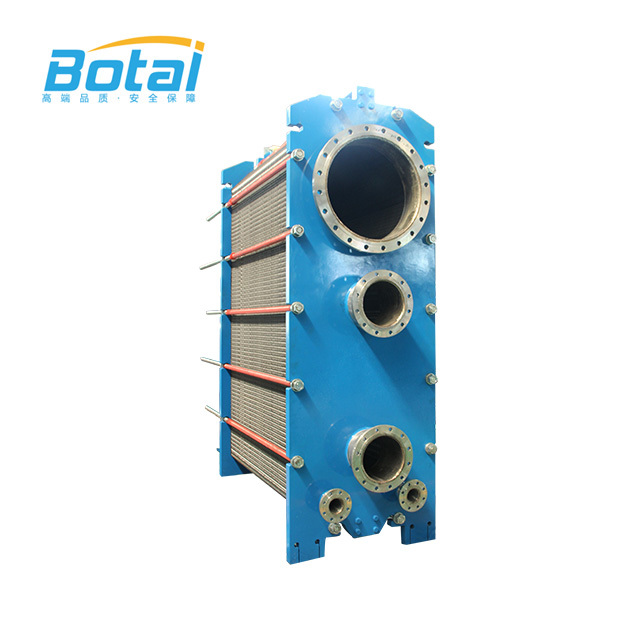
Plate Heat Exchanger Company: With prolonged usage and the influence of the operating environment,Water-to-Water Plate Heat ExchangerCorrosion issues will gradually appear, which is also a common phenomenon. Severe corrosion can affect the performance of the equipment, so what are the parts that are prone to corrosion?
1. Shell Corrosion
If the medium in the shell is an electrolyte, and the tube bundle baffle is made of copper alloy, while the shell material is carbon steel, it is prone to corrosion. If the welding quality of the shell and accessories is too poor, the water-to-water plate heat exchanger is easily corroded.
2. Corrosion of Heat Exchange Tubes
Dirt in the medium and vortex wear in the inlet medium can cause pipe corrosion, especially at the front inlet which is prone to corrosion, mainly because the fluid and dead corners easily generate vortex agitation.
3. Plate Heat Exchanger Company: The joints between the baffles, tubes, and tube sheets are prone to joint corrosion.
The joints between the heat exchange tubes and tube sheets, as well as between the heat exchange tubes and baffles of the water-to-water plate heat exchanger, are prone to cracking in the expansion tubes. When there is a gap between the tube sheet and the tubes, cl accumulation and oxygen concentration can occur, leading to corrosion on the surface or gaps of the heat exchange tubes.
Cracking at the junction of pipes and baffles is usually caused by more baffles and longer pipes. Local stress concentration can easily occur on the baffle and pipe wall, leading to price differences, making this part a weak link in the corrosion of the heat exchanger.
The main reason for corrosion in water-to-water plate heat exchangers is that most heat exchange equipment uses water for heat exchange. As the temperature rises, certain salts crystallize and adhere to the surface, forming scale. Initially, the scale is relatively soft, but as the scale layer forms, it gradually hardens and becomes fixed on the surface of the heat exchange tubes.
Plate Heat Exchanger CompanyTherefore, if you understand these easily corroded parts of the water-to-water plate heat exchanger, you should pay more attention during normal use and regularly maintain the equipment to effectively reduce the range of corrosion. Alternatively, one can choose some more corrosion-resistant options, but such heat exchangers are relatively expensive, and everyone can make reasonable choices based on their budget.
Previous Page:

Address: Baofu No.2, Tianbao Economic Development Zone, Baodi District, Tianjin
Telephone:+86 022-29277918 +86 15510836301
Fax: 022-29277920
E-mail:tjbthrsb88@163.com